
Families as experts in their own lives.
I'm a numbers person.
Statistics genuinely excite me. I can spend an embarrassing amount of time looking at spreadsheets because I don't just see numbers—I see patterns. I see questions. I see people.
I also know that's not how most people experience data.
When someone reads that research shows prevention-based care improves outcomes for children and families, they often nod and move on. When I read it, I immediately start thinking about the families I've met and the conversations I've overheard. I start trying to picture what those numbers actually look like in real life.
These days, I don't spend as much time facilitating programs as I used to. My role has shifted behind the scenes. I make sure our team has what they need to do their work, I help think through difficult situations, and I spend a lot of time talking with staff after programs.
Those conversations are some of my favourite parts of the day.
Someone will come back from a program and tell me about a parent who finally spoke up during circle time. Another will mention that two caregivers exchanged phone numbers because they realized their children attend the same school. Sometimes it's a quiet conversation about a family that isn't ready for another service yet, but now knows where to go if they ever need one.
Those moments rarely make headlines. They don't usually fit neatly into an annual report either.
But they matter.
From the outside, our work can look deceptively simple. It looks like children playing. It looks like songs, crafts, coffee, books, and conversation.
People sometimes ask, "Is that really enough?"
It's a fair question.
Because if all you see is the activity, you've missed the work happening underneath it.
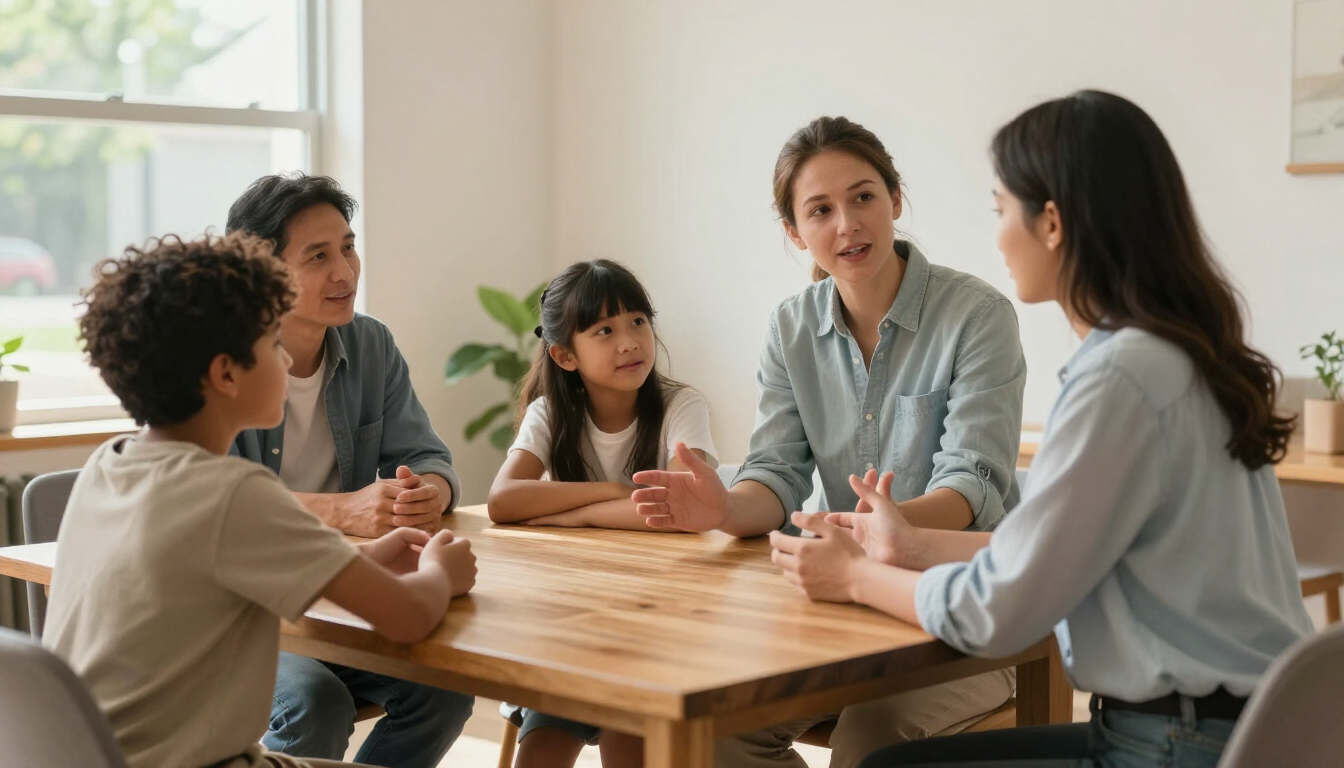
What I've learned over the years is that families don't walk through our doors looking for someone to take over their lives. Most already know their children better than anyone else ever will. They know their history. They know their culture. They know what has worked before and what hasn't.
What they're often missing isn't capability.
It's space....Space to think.
Space to ask questions without feeling judged. And, Space to hear another parent say, "We've been there too."
Sometimes they need information. Sometimes they need a connection to another resource. Sometimes they simply need someone to believe they already have the ability to take the next step.
That changes the way we think about support.
We aren't the experts in a family's life.
They are.
Our role isn't to rescue, fix, or direct. It's to walk alongside long enough that families begin to recognize the strengths they've carried with them all along. Research on the Strengthening Families Protective Factors Framework reinforces this idea by showing that parental resilience and strong social connections are two of the most important protective factors for children. Our role is to help create the conditions where those strengths can grow.
When people ask what prevention-based care looks like, I don't think about a particular program.
I think about a parent leaving with a little more confidence than they arrived with.
I think about a caregiver who now has another adult they can text when parenting feels overwhelming.
I think about a family that solved a problem themselves because someone took the time to ask, "What do you think would work?"
That's the part of prevention that is almost impossible to measure.If we do our jobs well, the family becomes the hero of the story—not us.
And honestly, I think that's exactly how it should be.