Conflict Resolution

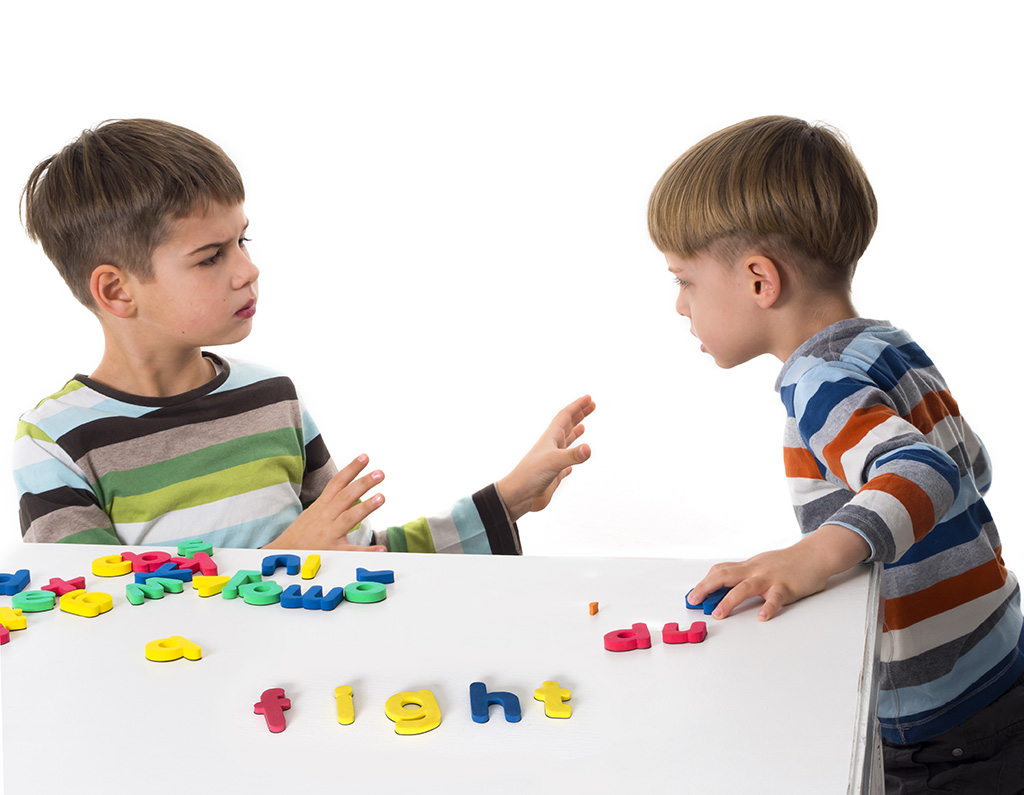
After all the hoopla of the Christmas holidays, both of my boys zeroed in on a favourite toy – an airplane that you can build with a toy drill and screwdriver. Listening to them argue over it (little Polar Bear can’t talk yet but makes his feelings well known) isn’t my favourite activity, but it does allow me to reflect on conflict resolutions between children (and myself).

Interestingly, teachers of elementary schools (you can also find variations on Pinterest) use a conflict resolution tool called the Wheel of Choices (see my mini toddler/preschooler one below). Primarily, I’m an avoidance conflict resolver. I tend to walk away to cool down and walk it off. This non-confrontational attitude helps me but it doesn’t seem to be my sons’ first choices.

Grizzly Bear, my older son, never steals toys from his brother but he does guard them. If his little bro arrives on the scene of a very good play session, Grizzly Bear tends to put toys under his arms and hoards them until he can’t actually use his hands for play. Or, if his little bro has a toy that Grizzly Bear wants, he won’t grab for the toy but he will stand in front of his brother like a football player and refuse to let him move from the spot he is currently occupying. If his little bro won’t give up the toy after this ploy, Grizzly Bear will come talk to me about it, using the “Talk” strategy listed on the wheel.

Polar Bear, my younger son, takes a more physical approach. Not able (or willing) to use words yet, he has more of a tendency to lean towards physically demanding he get his way. He does not hoard toys and will, more often than not, share toys willingly. He loves to watch others use a toy first to discover its secrets before taking a turn. However, if there is a favourite toy at stake that is not currently being shared equally, he will grab at or push others in his fury to have the toy. Once a parent intervenes, he is quite happy to share the toy again (as long as the turns are equal in length). Polar Bear uses the “Share” strategy.

Neither of my boys are old enough to use the Wheel of Choices on their own but I use it to help them. Here’s two reasons why:

  1. I want them to see that there are different strategies to resolving conflicts than the ones they have used in the past. I know from experience that my avoidance strategy has not worked for every situation. By seeing me use the tool, this role modeling reflects positively on them and they will be more willing to try new strategies.
  2. I want them to be comfortable choosing their own conflict resolution strategies. As they grow, they may tend to use this tool on their own when I’m not around or use it by memory if they are out of the house. As little as they are, they have constant adult supervision and are prone to seek adult intervention immediately. As they grow and have less supervision, I want them to make the right choices. Being an adept problem-solver is a gigantic skill in later life.

My Mini Wheel of Choices – 4 Strategies for Preschoolers

  1. Numbers – This is another way of saying take deep breaths or calm down. No one likes hearing “calm down,” least of all an emotional preschooler, but they do love numbers! Have your child count to five (or higher if needed). Count along with them and set the pace of counting to a slow, heavy-breathing rhythm. It’s also a crafty mom-way to teach your children to count.
  2. Walk – use this avoidance technique to remove a child from the situation. Give them a chance to think about things silently or have the needed moment to explain their frustrations to you, a caring adult. Also, taking them outside is a great stress reducer and decreases bullying (read about the Chester Elementary School’s Outdoor Play and Learning pilot project in Today’s Parent here).
  3. Talk – try to have the children explain the situation to you in front of one another. I know that this could lead to more arguing in a he said-she said way but I found it also helps children see the other’s point of view. Let the conversation develop and never cut it short (this is tough when you’re entertaining company or are in a hurry, I know). Continue the conversation as long as necessary to reach a resolution.
  4. Share – I practice a “Mommy shares with you, so you share with him” rule. I always try to role model good behaviour and tend to say share more often than any other word, even when it’s not the topic of conversation. Instead of saying “would you like some ____,” try to say “would you like me to share some ____.” This emphasizes that sharing is just a natural part of the world in which we live (and it also helps when you need to get your phone/keys back from your toddler).

As my kids age, they will notice that more and more options will be added to their strategy repertoire. Starting little like this will allow them to be comfortable with these basic options before moving on to other, more complex problem-solving strategies. I encourage you to make your own pin-wheel of choices. Please feel free to use these strategies (and invite ideas from your own family)!

Mini Helpers

This week at KARA you’ll find the guys and gals outside with a Fun In The Sun theme! My little bears love being outdoors and have tremendous fun at spray parks.

The featured photo is of my Polar Bear making his way through a minefield of sprinklers in order to get to me. I feel the right caption to describe the look on his face is “Do I Have a Plan?”

But what if summer days aren’t sunny? We all know The Cat in the Hat children’s classic but do we really want to see our children staring out of windows at the rain in the absence of a large, talking feline? On these kinds of days, I like to get my children involved in something, engaged in what I’m doing, and entertained by simple daily tasks. No, I’m not talking about crafts or building forts out of my freshly laundered towels. We do that often enough during winter months. I’m talking about CLEANING! 􀀀

Cleaning and organizing are what I love to do with my kids and they are young and impressionable enough that they think it’s fun! We put some good, dancing music on, usually a Shania Twain album, and just let loose!
If cleaning, I prep some extra spray bottles of water for my two boys while mine is a combination of water and vinegar. This way, if they pick mine up and spray each other, the worst that happens is that they start to smell like a salad.

Next, I give each of them a scrubby pad and a baby wash cloth. My older Grizzly Bear actually has a fair few muscles now and can actually see the difference when making something clean. We wash floors and mirrors together, after making silly mirror faces of course. My little Polar Bear makes some developmental progress while feeling the different textures of the cloths. The smooth, soft baby cloth versus the rough, bumpy scrubby brush really enthrals him, plus add a bit of water and watch out!

When organizing, I bring my kids into the room that we will be working in and close the door. Clothes, books and long lost forgotten toys move too quickly in the hands of my children and my pulse quickens when watching them cart around dozens of escaping LEGO blocks. I usually only invite my kids to help organize my own room or theirs. They love organizing mommy’s closet and putting on my shoes! When we organize their rooms, I bring down the boxes of toys lingering at the tops of closets. By storing some toys away, it allows me to rotate their toys so old ones become new again, saving a buck, and outdated toys can be sold, making a buck.

There are a few things I’ve learned along the way when it comes to soliciting my children’s help in daily chores, however. Pushing buttons on the laundry machines, using the feather duster, and sweeping dog hair under the rug is all good fun but I’ve learned some areas are just not meant to be cleaned by kids. The dishwasher has led to a few close calls as my little ones are just too little. Likewise, the cleaning of the bathroom isn’t meant for curious little bears. It’s icky enough to clean a toilet as an adult with proper sanitary routines. Add a kid and… well I just don’t want to think about it.

In conclusion, parenthood is a busy time. You’re always doing the right things for your children but the right things often pile up when you add them together. Changing diapers and clothes, potty breaks, brushing hair and teeth, feeding them healthy meals that can take hours to make,
doing arts and crafts, reading to them, taking them to programs, teaching them good manners, and the multitude of other tasks we do for our loved ones add up quick. This is just one way of combining a few tasks together to try and make it easier on yourself as a busy parent. But hopefully our families’ summer continues to be sunny, and if not, at least our houses will be clean!

It’s Potty Time

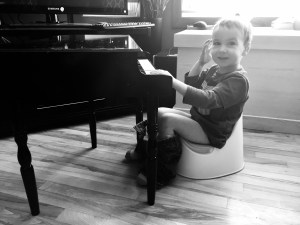
Today I wanted to touch base on a long and tedious battle between the toilet and my son.

My husband and I started potty training our oldest son, our Grizzly Bear, at two years of age. At the time, my second child was well on his way to being welcomed into the family and before then, we thought we’d try to make things easier on ourselves by potty training our first born. He was a smart lad and willing to learn new skills, this was going to be easy.

We started out with the old fashioned portable potty. Sat him on it and tried to keep him there with books, toys, food, and even the television. Each strategy worked well for a little while and then psychological warfare would have to be kicked up a notch as our Grizzly Bear would grow tired of sticker rewards and saying bye bye to his pee as it swirled around in the flushing toilet.

Fast forward eight months. You read that right; eight months………
By this time, we’d pulled out all the stops including following expensive and temper tantrum inducing advice from family, friends, and internet strangers (like myself).

My sister told me she purchased special underwear for her child, dawning his favourite movie character. When he pooped his pants, she made him throw the undies in the trash. He hasn’t had an accident since. He was three when he successfully potty trained. I tried this tactic with our Grizzly Bear at 2.5 years and the only thing accomplished was the purchasing of very expensive soon-to-be garbage. No success there. My Mom secretly fed Grizzly Bear Smarties for every successful potty pee/poop. This only resulted in my son having extra sweets as he still only used the potty half the time and even expected a candy after going in his pants. Grizzly Bear has a slight addiction to Smarties now.

Internet sensations indicated scheduling potty breaks and determining your child’s poop schedule through what I can only assume is psychic reasoning. It is true that my son is a regular pooper and predicting his bodily functions wasn’t too difficult. That is until he got a cold or slept funny the night before or was fed prune juice at his dayhome.

In the end, my husband suggested one last tactic that we hadn’t heard anywhere before. We were a bit desperate to try anything at this point as it was hard to keep up diapering two children. However, let me start out by saying that this experiment did not work and should not be tried ever again in the history of potty training.

We decided to put Grizzly Bear’s potty in his room with him at bedtime and let him sleep in the half nude. We figured he would either go in the potty if he needed or fall asleep without pants. No big deal right?? Big deal it turns out. I hear him 10 minutes later saying he went in his potty. I enter his room with excitement and joy only to stop short with wide eyes and a speechless expression.

He did pee in the potty (hooray!) but then, in his infinite wisdom, he picked up his potty in an effort to bring it to the big potty and dump it, only to spill it all over the hardwood and attempt to clean it with his bare hands. That’s right, he was covered in wee. I ran for a cloth and began soaking up the mess as my adoring toddler comes up behind me to offer encouragement. I cringe as the smell rolls over me, my toddler stroking my hair, saying “that’s a good girl, mommy.”

Although none of the “tactics” we used worked for our Grizzly Bear, he did eventually potty train at 2 years and 10 months. He did not potty train as a result of our hard work or ingenious potty plotting, but simply as a result of being ready and willing. After reading this, I’m sure you’ll agree that my husband and I are no experts on toddlers and the wonder that is the toilet.

We simply reflect upon the last year and agree that every child is indeed different and each learn on a different time schedule. We had some good laughs and are even looking forward to our next potty trainer, our Polar Bear!

My KARA Heros

Hello again, great to see you back! This week let’s dive into the KARA Summer Program; a fun-filled adventure around every corner, from great dinosaurs to the wild safari, every week has something different to offer!

If you weren’t aware, KARA has three locations; KARA, KARA-Too, and Dunluce Tenant Centre. Each of the addresses can be found on the KARA homepage or on the summer program calendar. Choose the location nearest you or attend all three!

The summer program calendar details the weekly themes for the free drop-in programs, held Tuesday through Thursday and Saturday, at varying times to accommodate those difficult nap schedules. Interspersed throughout the summer, we will be hosting field trips that are sure to inspire and wow your little ones, including nature centres, spray parks, and a dinosaur theme park!

When packing for these adventures, please remember necessities such as sunscreen, water bottles, hats, and comfortable shoes. Odd bits and pieces that may apply to your family may also include swim diapers, baby food, and extra changes of clothes. A light lunch will be served but if your children are anything like mine, it’s best to pack a mini fridge into your diaper bag.

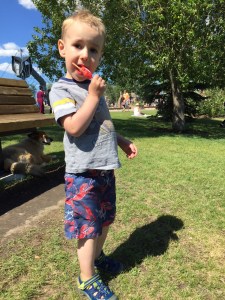
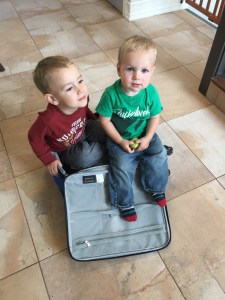
Last summer, when KARA hosted a field trip to the Ukrainian Village, I attended as a Mom and hauled along my toddler (featured picture) and newborn baby. At first I felt like Mom of the Year. Look at me, strong and independent, on an outing with two young children and I can handle anything! As the day wore on, my children began to tire – and so did I! I’d try to keep my toddler’s spirits up with food, toys, and a happy singsong voice that made birds abandon their nests. All for not though, as I soon found out what being a Mom of a toddler will teach you if nothing else, very little can deter an impending temper tantrum.

At the time there was no mistaking the signs; the wobbly walk, the whimpering whines, the tearful eyes, and there it was. My son collapsed on the ground, his childlike, yet mighty voice thundering his displeasure. As I stood there at a loss, shocked with the task of consoling a two year old heap of emotions rolling on the grass in front of me while simultaneously holding an infant in my arms, in swooped my heroes. The KARA team took and cared for my newborn while I consoled my tired child, all the while putting the pieces of my dignity back together. It wasn’t so bad after all.

So if your child’s tantrums or behaviour in public places are the kind of moments you are dreading, deterring you from attending a field trip or program, fear not. We’ve all been there (and the ones that haven’t should give credit to where credit is due). Parenting isn’t easy. Mom of the Year goes to those that get out and about and if you attend KARA this summer, put your mind at ease. The KARA team has been there hundreds of times over and will be there for you too. Dignity and all.

Breast Milk

We’ve all heard it – breast is best – but do you know why?

The History of the Mammary Gland:

Breast milk has been researched for hundreds of millions of years. You read that right, nature has been perfecting this food source for longer than bees have been perfecting honey. You can read about the evolution of breastmilk here. BBC goes into detail on how mammary glands and breast milk came about and why they had the evolutionary advantage. Shockingly, mammary glands are thought to have evolved before mammals did. Once leaving the water, animals either made soft or hard shells. Hard shells had the advantage of not drying out but soft shells, well they supported the transfer of water. So mama walking-fish would have soft-shelled babies and bring them water in a gland on her body in the hopes they wouldn’t dry out. This gland, after many generations, evolved to secret antibodies, fats, carbohydrates (sugar), etc., which was now food for her babies (they could eat it once it absorbed into their shells). After baby hatches, the gland still produces and the baby has a wonderful mama walking-fish to feed him. Magic, right?

Now, after millions of years, only mammals (and primitive egg-laying mammals) have this ability. Females of the lactating species are called mammalia which means “of the breast.” It’s pretty cool to be defined by a highly respected evolutionary trait, one that has led our species to care for our young in the most effective way.

The Contents of Human Milk:
Going into detail about humans and why human milk is so precious – please check out the amazing infographic (found at the bottom of this section) of the contents of what you are feeding your baby (or toddler). It dives into each component, such as the fats, nucleotides, enzymes, carbohydrates, and antimicrobial components, just to name a few.  These contents, components, molecular compounds – whatever you want to call them – have astonishing properties that protect your baby (and read what’s going on in his body – seriously). The infographic (with supporting references) was made by a group of women and men who found that human milk was just so amazing, they had to compile the info.

I’m going to list one (maybe two) benefits from some of the milky component categorized in the infographic – the ones which were my favourite and little well-known:

Carbohydrates (Sugars)
• Breastmilk contains over 200 sugars. Some of these sugars can only be digested by bacteria which easily promotes a healthy gut microbiome.
Enzymes
• Lysozyme is anti-inflammatory and bacterialcidal (destroys bad bacteria) and is particularly effective against E. coli and salmonella.
Antimicrobial
• Lactoferrin inhibits the growth of cancerous cells and Alpha-lactabumin has pain-relief abilities.
Vitamins
• Vitamin E is an antioxidant which inhibits or removes oxidizing agents (free radicals) from within you. Free radicals are uncharged molecules that are extremely reactive and can break down cell membranes. In chemistry, for those that know a bit about it, free radicals form when a molecule loses or gains an electron. Our bodies use antioxidants to balance free radicals (give or take an electron to neutralize it).
Mediators
• Stem cells – that’s right, breast milk contains stem cells! They can self-renew to repair any organ or system in the body.
Hormones
• Oxytocin creates positive feelings. This is super beneficial for both Mom and baby. For Mom, it helps stop bleeding after birth and shrink the size of the uterus. For baby, promotes feelings of well-being and relaxation.
• Leptin, a hormone like a switch, it turns on a gene that tells the baby when he is full. This is a gene that prevents overeating as an adult.
There are more (lots more) and you can read about them or check out the infographic here.

My absolute favourite though was learning that Momma’s body, through baby’s saliva, identifies what bacteria or virus the baby is currently fighting and produces antibodies specifically designed to fight those infections. Talk about Mom-baby communication.

Lastly, Let’s Not Forget the Bonding:
One thought before I move on to the science behind the bonding – I miss breastfeeding. The connection I felt to my babies was so strong and comforting. I recall the first time each of my boys made true eye contact with me – it was while they were breastfeeding. Snuggles aside (snuggles aside!?), the best moments were the eye contact in which I knew they felt safe.
And now the science – I bet you knew there were benefits to a baby’s social well-being that came from breastfeeding but did you know there were health benefits for Mom too? Yes, yes, the benefits for baby is higher communication scores and increased cognitive ability (it’s important but I’m excited to get to the next bit).

For Mom, according to the American Psychological Association, breastfeeding increases and lengthens maternal sensitivity. Maternal sensitivity is the Mother’s responsiveness to her baby and her affect, flexibility, and ability to read her baby’s cues. The study conducted (located here) goes into detail on the Mothers that were interviewed and noted how the longer breastfeeding was the norm, the longer the sensitivity continues for Mom, expanding as the child grows (such as respect for autonomy, supportive presence, and withholding hostility). Amazing, right? By the by, breastfeeding also has been shown to decrease the risk of developing breast and ovarian cancer.

And one awesome detail that some of us forget – it’s way cheaper than formula. Eating a little extra during the day and make your own tiny human food? Super budget friendly.

So, are there cons to breastfeeding?
I did it with both of my kids (and nearly made it to the one year mark each time) and I only noticed two cons. One, it was really painful for me for the first couple of weeks. Two, I got some funny looks from friends, family, and strangers.

Yes the pros outweighed the cons for me but I did find some ways around the unpleasantness.

Painful Start to a Happy Ending:
The nipple shield – sold at Toys R Us or online and comes in various sizes. This nifty gadget is fantastic to protect Mom from a ravenous infant. I recall my first encounter with my midwife after nursing my firstborn for a few days. She asked me how bad it hurt and when I likened it to giving birth again she asked if she could see my baby. She laid him in her lap, backwards so his head was touching her tummy. She then stuck a finger in his mouth and cried out “Holy, you are vicious!”.

She promptly directed me to the nipple shield, which worked like a dream. It’s a plastic nipple that fits over your own and protects Mom from baby’s who have mouths like a shark. And it’s only ten bucks. My midwife did caution me to use it sparingly however, as it makes it a little more difficult for baby to nurse, which in turn decreases your milk supply. Funny Looks and Squeamish People My Dad (Grandpa) has a hard time staying in the room with a nursing Mom. He squirms in his chair if someone just says “breastfeeding.”

Perhaps I’m more like him than I thought. I found it difficult to feel comfortable breastfeeding around people, any people, even when wearing a nursing cover. Just knowing that they knew what I was doing made me feel awkward and as if I had to hide it. So I did – and this is how:

For those of us that are shy and don’t want to be the confident woman who tells people to just get over it, do what I did and get a baby backpack. The Ergobaby Baby Carrier was my favourite because it was so comfortable, I could wear it for hours, and did. I would just pop the hood over top of my baby’s head and no one, not even my Dad knew that I was breastfeeding. It simply looked like I was carrying my child in a fashionable carrier. Pretty sneaky, no.

So there you have it, breastfeeding in two swollen nutshells. If you were moved by this blog (I totally get it), and want to discuss your breastfeeding options or find breastfeeding support, here are two resources you may find helpful:

• Alberta Health Services (AHS) Healthy Beginnings Hotline (24/7) – 780-413-7990
• La Leche League (breastfeeding info and support) – 780-478-0507

Summertime Tips

Can you imagine one day without hearing your child laughing? How about imagining a day without spending time outside together? When the warm weather rolls around, I could never live without an abundance of both.

I am a mother of two amazing children (what child isn’t amazing?) and have the time of my life making them smile. Many of those smiles happen when we spend our days at KARA Family Resource Centre. Now, I’ve been with KARA as both a coworker and as a friend; as both a Mom and as a Mom-to-be. I’ve enjoyed all of my moments with my KARA family and know the truth about who I am and who my children are; we would not be the same without KARA (what KARA family would?).

Now for the summer part: when it comes to my children, I’ve come across a few summer related mishaps. By sharing these tips with you, I hope you’ll come out ahead.

Sunscreen. Yes, lather up your little ones (and yourself) with sunscreen SPF 30 of higher. Sun protection factor (SPF) is a rating of how long sunscreen will protect against UVB. Now, the sun emits both UVA and UVB (among other wavelengths) and the higher the SPF factor, the longer the protection against both UVA and UVB. For those of you with kids with an … interesting taste for adventure (pun intended!), make sure to lock up the sunscreen after you’ve used it. My kids don’t have a taste for it but my dog does. It’s best to put it out of harm’s reach either way. For youngsters, and I mean six months or younger, sunscreen is not recommended. Instead, grab a sunshade for the playpen or stroller.

Shades. How many times I’ve tried to convince my baby that sunglasses need to be worn outdoors will astound you. I originally purchased sunglasses without a strap and didn’t have the funds to buy a second pair so I opted to make my purchase work. It took quite some time to wear him (me?) down but this most amazing trick saved us. Every time I put the sunglasses on his face, I’d call him “Cool Dude” and he’d revel in the compliment of being called “Cool”. I learned this trick from a KARA family Dad.  Now, sunglasses should always have 100% UV protection. Choose shades that curve around the face to provide protection from side sunshine. Just like skin, the sun can damage eyes. The damage is worse when you have low levels of vitamin C, so bust out those oranges and strawberries!

Water bottles! Every child enjoys owning their very own accessory, and Mom’s enjoy not sharing the backwash. Get a water bottle that your child finds interesting and easy to use. Write your child’s name on it so it doesn’t go home with a friend. Plastic bottles decompose over time from our own saliva. Heat will also make plastic bottles break down. If you choose plastic, be sure to hand wash it directly after use. Don’t let it end up in the hot dishwasher. You can’t taste plastic but you also can’t digest it. Another, more convenient choice, is a stainless steel kids bottle. A little more expensive but they are relatively indestructible. They normally come with silicone straws (a natural material) so there isn’t anything to worry about when it comes to cleaning.

Lastly, get out there and enjoy summer! Your kids will have a blast at the KARA Summer Program and you’ll have a chance to use these helpful tips! Don’t forget, you’re a “Cool Dude” yourself!

Moving with Kids

Sooner or later, many families face the prospect of moving. Moving can be stressful, especially for children. I recently found myself moving with my two young Bears and, although the experience has been a success, the journey was a little tough, especially for our moving companion, Grandpa. For parents finding themselves thinking about moving, or even in the middle of it, I wanted to share with you some helpful tips to decrease the amount of stress this task poses on young minds.

After all, toddlers and preschoolers have a limited capacity to understand the reasoning behind major changes in their routines, and as parents, it’s our job to help them cope as best we can. When I was a teen, my family moved a lot; most people did. It would be for work or financial reasons and was always done for the best. But as a kid with friends and an established way of life, it didn’t always feel like it was for the best. Sometimes I would be upset. Sometimes I would be fine with it but one of my siblings would be upset. My parents would always explain why we were moving, being honest about the truth behind it.

This helped greatly with the emotional angst of a budding teenager. But now, as a mother of a preschooler and toddler, how would I explain moving? I knew I wanted to be honest as my parents were with me, but the language I would have to use would need to be simple and clear. I tried a bunch of communication strategies (listed below) and have notes as to how successful I thought they were in preparing my children for the move. I also listed a few scenarios I did not do in order to allow my children to settle into their new home comfortably.

Things I/We Did:

• I let my children help pack their clothes and toys; we completed this task while I repeated that the boxes are coming to the new house with us, not being thrown out. This was particularly helpful to my Grizzly Bear, a slightly emotional preschooler.

• I acted out the move with a toy ride-on truck and possessions; this was completed with my Polar Bear, a curious toddler, in mind. This got a little carried away with the road trip music and ended in a friendly wrestling match between my boys as they both wanted to be in the driver’s seat.

• We went to see the new house a few times and I showed them pictures of it. I explained which room would be their new room, which room was mine, and where the dog was going to sleep so they knew we were all moving in together.

• When arranging my children’s furniture in the new room, I tried to arrange it similarly to how it was at the old house; I hung the same posters above their beds and kept the same layout for comfort and familiarity, especially for when they woke up at night.

• We explored the new neighbourhood together and even got a small treat at the new corner store. I decided this was important even if my Bears were too little to go out alone; I felt it still gave them a sense of home and comfort.

• Lastly, I invited over family and friends a few nights after the move: the familiar faces let the Bears know that life hasn’t changed all that much. I found the communication techniques I used worked well. Quite a few of these communication tips came from KARA’s “How To Talk So Kids Will Listen” program and I adapted them to my home switching journey.

For example, when I was a new Mom and had a baby Grizzly Bear, I was told that Santa is a scary figure to young children and that there was one way to introduce Santa without causing tears. I was instructed to show my son a picture of Santa every few days the month leading up to Christmas.

This would help familiarize my son with this new character and by seeing the smile on my face while I talked about him reassured my child that this old, bearded man with a booming laugh was trustworthy. Thus, by showing my newest toddler, my Polar Bear, pictures of our new home, he too would have a friendly, familiar feeling towards it.

Things I/We Didn’t Do:

• We didn’t talk about the move months in advance of it happening; it was a little spur of the moment but I feel I wouldn’t have told them even if I knew myself, as it could create unnecessary anxiety. As parents, we need to plan, but for children so young, it may have created a daunting, unpleasant feeling.

• I did not pack up my children’s possessions while they weren’t watching; I wanted to keep trust and honesty at the forefront of this adventure and taking all their things away without explaining where they were going could cause stress and distrust.

• I did not purchase new furniture; I felt that old furniture would be comforting and familiar to my Bears and new furniture in a new house would be too much for them.

• Although my toddler is ready to transition from a crib to a toddler bed, I felt like waiting until he is comfortable in his new home would be less stressful for him.

• Lastly, I did not drop my Bears off with a new daycare the same week I moved: I was fortunate enough to have a family member care for them, allowing them time to adjust to the new home first. This is where poor Grandpa came to the rescue. Yes, Grandpa, poor Grandpa. I recall the third day after leaving my little Bears with him. “No, they’re good kids, Marnie. They don’t like being in the same room as me, but they’re good kids. Well, I’m off for a nap.”